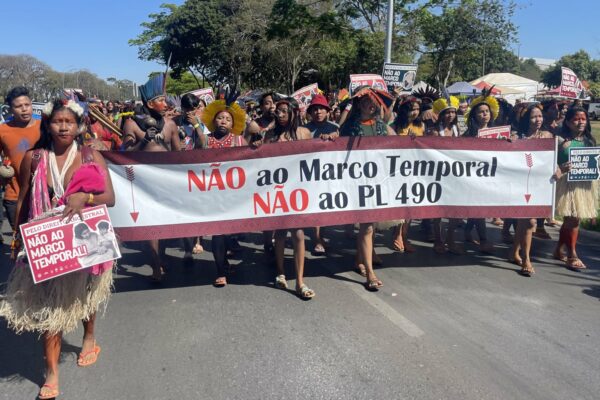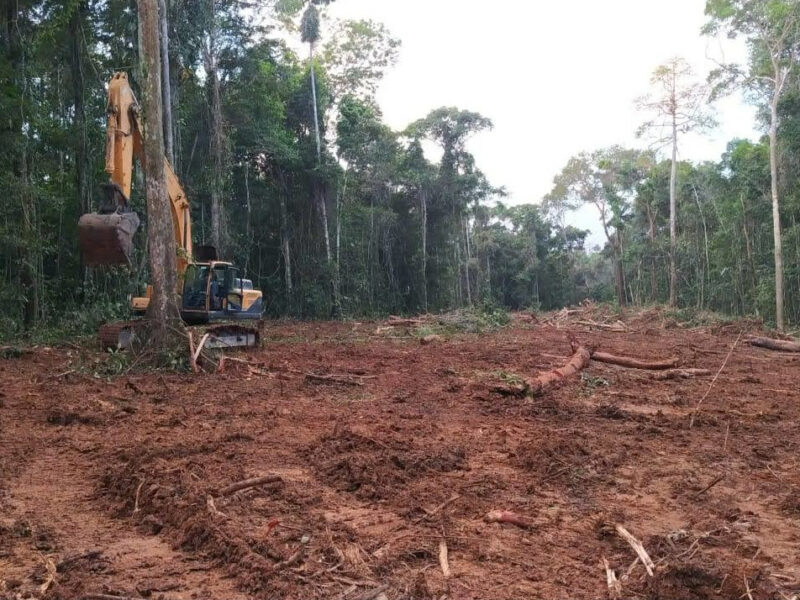

Indigenous people, environment groups and others hoping to force a national referendum on whether one of the world’s most biodiverse regions should be exploited by oil companies fear that the Ecuadorean government is manipulating the results of a petition in order to support the president.
Ecuador’s proposal to leave an 846m barrels of oil in the ground under the Ishpingo-Tambococha-Tiputini (ITT) area of the Yasuni national park in the Amazonian rainforest and ask the world to compensate it with half its monetary value was hailed as a revolutionary new conservation idea when it was agreed by President Rafael Correa in 2007.
But when only around $300m had been formally pledged by August 2013, Correa reversed his decision, saying the estimated $7bn that the country could eventually earn from the oil was needed to alleviate poverty.
However, Correa accepted that under Ecuador’s constitution, a referendum would be triggered if 5% of the country, or 584,000 people, signed a petition within nine months. To the surprise of the authorities, a loose alliance of civil society groups calling themselves the YASunidos, claimed two weeks ago to have secured more than enough signatures.
“When we officially handed over almost 760,000 signatures on 12 April, we knew we had gained more than enough signatures legally needed. Sadly the National Electoral Council (CNE) manipulated [some] parts of the materials we submitted. The box containing the IDs of all the collectors required to verify each page of signatures, was illegally opened by the CNE without our presence and the IDs of many signature collectors have mysteriously disappeared,” said Josephine Koch, an activist working with the alliance.
Kevin Koenig, Ecuador programme director of Amazon Watch, said: “It is extremely troubling to see these kinds of irregularities so soon into the verification process. It calls into question whether the CNE can indeed be objective and non-partisan. The eyes of the world are watching – this is a critical moment for Ecuador’s democracy and the credibility of Correa’s administration.”
The YASunidos now fear that the government is using technicalities to eliminate many of the signatures that an army of more than 1,000 volunteers collected from the internet, social media and public meetings.
“It is very alarming, because missing or illegible IDs could cause the invalidation of hundreds of thousands of signatures. Also, the verification of signatures began without observers of the YASunidos alliance. This is a serious violation of the constitution and a fraud to the Ecuadorian citizens. We are outraged about the untransparent and undemocratic methods being used to avoid a national referendum against the government’s plans,” Koch said.
The signatures, say the YASunidos, are being verified in a military base to which the public has only limited access. “We are truly under-represented. There are about 250 persons from the CNE there but just 10-25 of our observers every day. It’s totally arbitrary who can go in. Sometimes we wait the whole day outside. We are not allowed to go inside with cameras or phones and they don’t answer our questions. It’s impossible to monitor what they are doing, and one can’t see what happens behind the screens of their computers. They cancel signatures and we can’t do anything. We think the president doesn’t want this referendum, because he fears to lose it.”
President Correa has openly discounted the likelihood that the required support can be mustered, saying he expects up to 40% of the submitted signatures to be illegitimate.
“There are all kinds of technicalities that can be used to disqualify signatures, even as petty as the colour of the ink used to sign the petition – it must be blue. Even if the minimum number of signatures were surpassed by thousands, when detailed scrutiny is applied to each entry, it may be simple to discard a huge proportion of them due to technicalities. He’s also stated that probably a huge portion of the signatures have been falsified, essentially saying that there simply isn’t enough support and that environmentalists are unethical liars and cheats,” said Kelly Swing, director of the Tiputini biodiversity station in the Yasuni national park and who helped collect signatures.
The YASunidos say that they went to extreme lengths to ensure that the signatures are all valid. “We organised brigades of signature collectors in all provinces and established collection points where the people could sign or handover filled-in forms. For over six months over 1,000 volunteers dedicated their whole free time to collect signatures for the referendum. They did this without any help from the state – neither logistical nor financial – although it is a constitutional duty to defend the rights of nature and a constitutional right to convoke a national referendum,” said one activist.
Correa, who has said that Ecuador will not continue to be a “beggar sitting on a sack of gold” just because a few environmentalists are not willing to accept some “minor sacrifices” has maintained that the oil money will overcome poverty.
In a recent interview with the Barcelona daily La Vanguardia, he said that approving oil drilling was “the hardest decision” of his seven years in office.
According to the Ecuadorian constitution, the result of a national referendum would be a binding decision meaning the government would not be allowed to exploit the oil in the Yasuni-ITT, without violating the constitution.
The Yasuni Biosphere Reserve, where the oil has been found, is considered the heart of the Earth’s most biodiverse ecoregion, western Amazonia. Yasuni is inhabited by 150 species of frogs, around 200 species of mammals, more than 120 different kinds of reptiles, 600 species of birds and over 2,000 species of trees.
The Ecuadorean government was contacted but has so far declined to comment.